Real-Time Video: The Visual Nerve of Modern UAVs
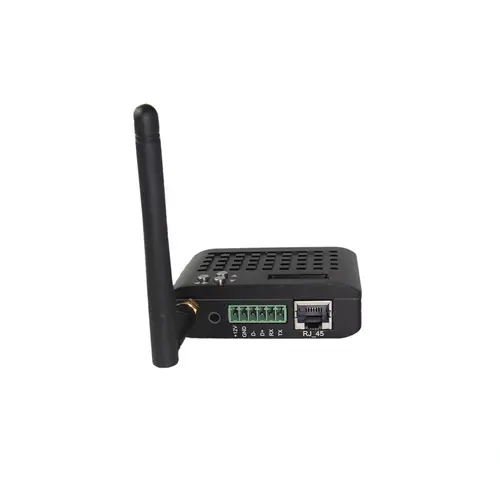
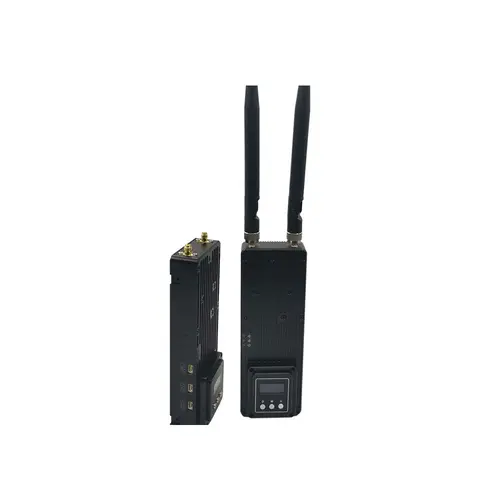
As drone technology deepens its footprint across industries, the wireless image transmission system functions as the UAV’s “visual nerve” — its performance directly defines the operational ceiling of the entire platform. Sdison Technology (Shenzhen) specializes in COFDM-based wireless transmission, and our engineering teams have observed that wireless image transmission technology is creating entirely new possibilities for UAV applications.
In aerial photography, surveying, power line inspection, and emergency rescue, wireless image transmission shoulders the critical task of sending airborne footage back to the ground station in real time. Low-latency transmission is the fundamental requirement for drone control and video return. When a UAV is flying at high speed or performing precision operations, video delay directly impacts the operator’s reaction time and decision accuracy. Modern COFDM-based wireless image transmission systems optimize signal processing pipelines to maintain end-to-end latency well under 100 milliseconds, providing the responsiveness needed for safe flight and precise maneuvering.
Extending Transmission Range Through Adaptive Technology
Transmission distance is another key metric for UAV wireless image transmission performance. In surveying, mapping, and power inspection, drones often need to cover large areas during a single flight. Sdison’s wireless transmission solutions combine adaptive coding with intelligent antenna technology, dynamically adjusting transmission strategy based on the distance between the UAV and the ground station. This maintains stable image quality while extending effective range, meeting the demands of medium-to-long-range operations.
Anti-Interference for Complex Environments
Wireless image transmission stability deserves equal attention. When operating in urban environments or remote wilderness, UAVs encounter various forms of wireless interference including multipath fading, co-channel interference, and signal blocking. Sdison’s COFDM-based systems incorporate advanced anti-interference mechanisms that automatically detect and avoid specific frequency-band interference, reducing video stuttering, pixelation, and signal dropout. The result is higher operational efficiency and better data integrity across every mission.
Integration and Platform Compatibility
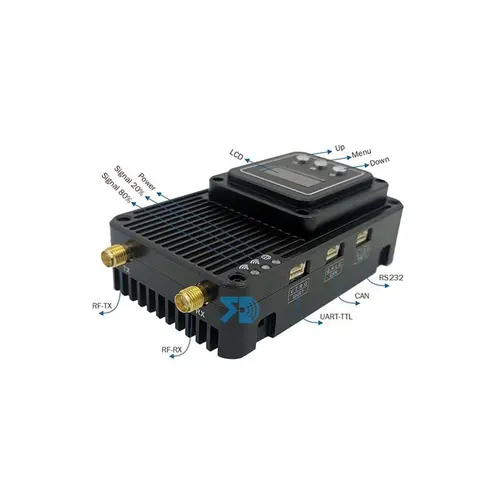
Beyond raw technical parameters, how well the wireless image transmission module integrates with the UAV platform is a critical real-world consideration. Lightweight, low-power design extends drone flight time, while proper thermal management ensures stable performance during extended operations. Sdison works closely with UAV manufacturers to optimize the physical footprint and power consumption of our transmission modules, ensuring compatibility across different drone platforms — from compact quadcopters to large fixed-wing systems.
The Hybrid Future: COFDM Meets 5G
The convergence of 5G infrastructure with traditional wireless image transmission technology is opening a new chapter for UAV communications. 5G’s high bandwidth and wide coverage provide a new pathway for ultra-high-definition video streaming from drones. Sdison is actively developing hybrid transmission solutions that combine the proven reliability of COFDM with the ubiquity of cellular networks, giving UAV operations redundant communication paths in complex environments.
Conclusion
The continuous evolution of wireless image transmission technology is expanding the depth and breadth of UAV applications across every industry sector. Sdison Technology (Shenzhen) drives this progress through improved transmission range, lower latency, and stronger anti-interference capabilities, providing reliable video transmission solutions for UAV applications. As communication technology advances further, wireless image transmission will unlock even richer and more diverse use cases for unmanned systems.