SDXTDD Ad-Hoc Wireless Transmission Module
SDXTDD
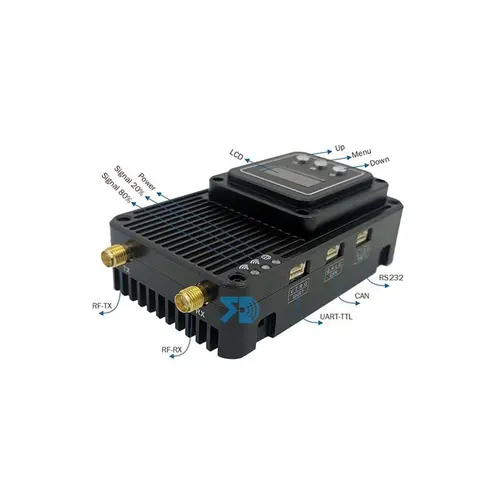
Compact NLOS TDD-COFDM ad-hoc network module with ≤30ms latency, 300mW output, and CAN/RS-232 control for drones, robotics, and industrial automation.
Technical Specifications
| 800 MHz / 1.4 GHz / 2.4 GHz selectable | |
|---|---|
| TDD-COFDM MIMO | 300 mW · 30 Mbps |
| ≤30 ms end-to-end | AES256 |
| NLOS 300–900 m | LOS 2–18 km |
| CAN, RS-232, TTL | DC 9–28V |
Dimensions: 95 × 58 × 34 mm
Overview
The SDXTDD Ad-Hoc Wireless Transmission Module is a compact, embeddable radio platform built on the TDD-COFDM wireless standard. Combining Orthogonal Frequency Division Multiple Access (OFDMA) modulation with MIMO spatial multiplexing, it delivers bidirectional IP data at up to 30 Mbps through a module measuring just 95x58x34mm and weighing 190 grams. End-to-end latency is kept to 30 milliseconds or less, making the SDXTDD one of the lowest-latency wireless data modules available for its class.
The module supports a full range of ad-hoc networking topologies -- point-to-point, point-to-multipoint (up to 16 nodes), mesh, and relay -- all operating on a single frequency channel. Each node occupies unique subcarriers within the OFDMA frame, enabling multi-user concurrent access without collision. This is the foundation of the SDXTDD family, representing the company's core TDD-COFDM technology in its most compact and integration-friendly form.
Key Features
- Ultra-low latency with end-to-end transmission delay of ≤30 ms, ideal for real-time remote control
- 30 Mbps IP throughput over Ethernet via dual locking RJ45 ports plus a third internal port
- Multi-mode networking supporting point-to-point, point-to-multipoint (16 max), mesh, and relay topologies
- Rich control interfaces including CAN bus (1 Mbps), RS-232 (115200 bps), and TTL level (115200 bps) for direct sensor and actuator integration
- Selectable frequency bands at 800 MHz, 1.4 GHz, and 2.4 GHz with bandwidth from 1.4 to 20 MHz, all configurable via the optional LCD panel
- AES256 encryption settable in the field through the LCD interface
- Wide voltage input from 9 to 28V DC with low power consumption at 5W typical
- MIMO 1T2R antenna diversity for improved link reliability in multipath environments
- Transmission range of NLOS 300-900 meters and ground line-of-sight 2-18 kilometers at 300 mW transmit power
Technical Highlights
The SDXTDD employs time-division duplex (TDD) over COFDM, meaning the same frequency channel is time-shared between uplink and downlink. This eliminates the need for paired spectrum and simplifies frequency planning. OFDMA assigns distinct subcarrier groups to each user, allowing simultaneous bidirectional traffic within the same channel bandwidth. MIMO 1T2R provides receive diversity that substantially improves the link budget in reflective environments. Adaptive modulation (BPSK, QPSK, 16QAM, 64QAM) transparently optimizes throughput against prevailing signal-to-noise conditions. The integration of dedicated CAN, RS-232, and TTL ports means the module can bridge traditional serial control buses directly over the wireless link without external converters.
Applications
The SDXTDD's combination of low latency, small footprint, and versatile I/O makes it a natural fit for robotics -- patrol robots, bomb disposal units, firefighting robots, UGVs, and drone ground control links. It is equally suited for public safety applications including police, fire, emergency response, maritime patrol, customs, and border security. The mesh networking capability enables rapid deployment of temporary communication corridors in tunnels, urban canyons, and forested terrain where infrastructure does not exist. The module's wide input voltage and low power draw simplify integration into battery-operated platforms.
Why Choose This Module
The SDXTDD packs a full-featured TDD-COFDM ad-hoc network into a 190-gram module that any embedded system can accommodate. Its sub-30 ms latency, native CAN/RS-232/TTL bridging, and single-frequency mesh networking reduce hardware complexity and deployment friction. For integrators who need bidirectional wireless broadband in the smallest possible footprint -- without sacrificing security, range, or real-time responsiveness -- this is the module to build around.
Related Products
Fengjin FHSS Broadband Transmission System
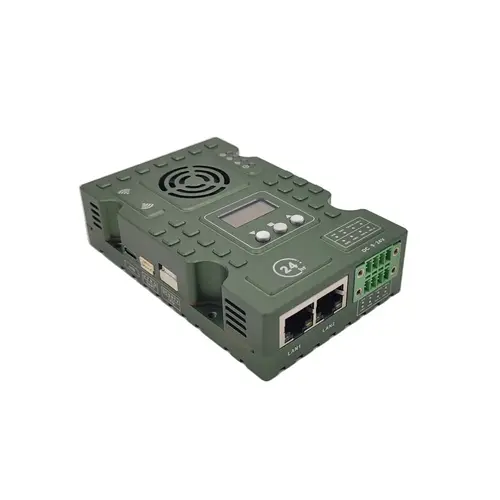
Industrial FHSS frequency-hopping broadband data link with 130MHz hopping bandwidth, AES256, MIMO, and mesh networking for interference-resistant NLOS/LOS operation.
- 1.400–1.530 GHz · 130 MHz hopping BW
- 300 mW · BPSK/QPSK/16QAM/64QAM
- 30 Mbps · 50 ms latency · AES256
- Mesh, relay, PtP, PtMP (16 nodes)
- RJ45, CAN, RS-485, TTL interfaces
- 110.5 × 70 × 28.5 mm · 236 g
HBCOFDM Micro Broadband Transceiver
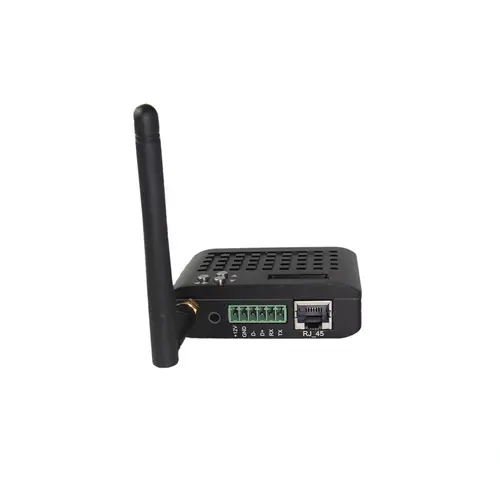
Ultra-compact TDD-COFDM bidirectional data/video transceiver with 10–30ms latency and 2.4GHz ISM band, purpose-built for UAV, drone, and short-range robotic links.
- 2405–2479 MHz ISM · TDD-COFDM
- 100 mW–1W · 1–10 Mbps throughput
- 10–30 ms latency · AES128 encryption
- Air-to-ground 5–20 km · Ground LOS 1–5 km
- RJ45, RS-232/422/485 · 110 g
- 67 × 51 × 22 mm · 110 g

SDX-1080DTA Backpack Duplex Voice HD Video System
Military backpack COFDM HD video system with duplex voice intercom, 60ms low latency, AES256 encryption, and SDI/HDMI inputs for tactical field video relay.
- 300–4400 MHz · COFDM · 2W output
- H.264 · 1080P · 60 ms · AES256
- Duplex digital voice intercom
- SDI + HDMI dual input
- Military backpack design · TF card slot
- TX 204 × 125 × 55 mm · RX 1U 480 × 280 × 45 mm
Interested in This Product?
Contact us for pricing, custom configurations, and technical support for the SDXTDD Ad-Hoc Wireless Transmission Module.
Get a Quote