HBCOFDM Micro Broadband Transceiver
HBCOFDM
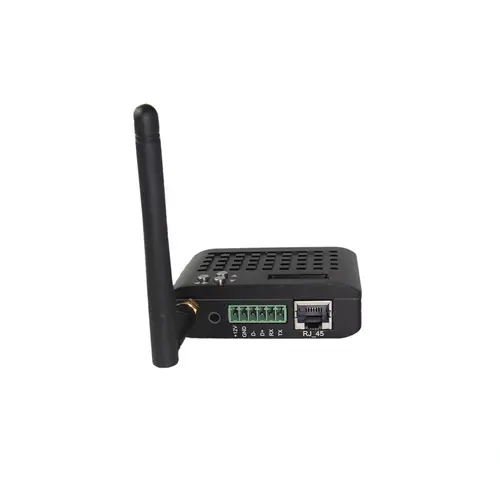
Ultra-compact TDD-COFDM bidirectional data/video transceiver with 10–30ms latency and 2.4GHz ISM band, purpose-built for UAV, drone, and short-range robotic links.
Technical Specifications
| 2405–2479 MHz ISM | TDD-COFDM |
|---|---|
| 100 mW–1W | 1–10 Mbps throughput |
| 10–30 ms latency | AES128 encryption |
| Air-to-ground 5–20 km | Ground LOS 1–5 km |
| RJ45, RS-232/422/485 | 110 g |
Dimensions: 67 × 51 × 22 mm · 110 g
Overview
The HBCOFDM Micro Broadband Transceiver redefines what fits on a small UAV. At just 67x51x22mm and 110 grams, this bidirectional data and video link packs TDD-COFDM modulation, AES128 encryption, and 1-10Mbps throughput into a board-level form factor that integrates directly into drones, UGVs, and portable field nodes. It operates in the license-free 2.4GHz ISM band (2405-2479MHz), complying with open-frequency regulations worldwide.
What makes the HBCOFDM genuinely different is its TDD (Time Division Duplex) architecture on top of COFDM modulation. While many micro transmitters are one-way, this unit is a true transceiver — it transmits and receives on a single frequency channel by allocating time slots, giving upstream and downstream paths equal access. This enables real-time bidirectional data, telemetry, and control alongside video downlinks, all in one compact, low-power radio.
Key Features
- Ultra-compact and lightweight: 67x51x22mm, 110g — designed for integration into micro UAVs, drones, unmanned boats, gliders, and handheld field equipment with minimal payload impact.
- License-free ISM band: Full 2405-2479MHz frequency range, adjustable in 1MHz steps, compliant with open-frequency regulations (no individual license required).
- TDD-COFDM bidirectional link: Single-frequency-channel full-duplex operation delivers simultaneous upstream control/telemetry and downstream video/data with 10-30ms end-to-end latency.
- Configurable power and bandwidth: RF output adjustable from 100mW to 1W, channel bandwidth selectable between 4MHz and 8MHz via the built-in LCD panel — adapt to range, throughput, and regulatory requirements on the fly.
- Multi-interface data connectivity: Standard RJ45 Ethernet plus industrial RS-232, RS-422, and RS-485 serial interfaces support virtually any payload — cameras, sensors, GPS modules, and autopilots.
- Impressive range: Air-to-ground transmission from 5 to 20km, ground line-of-sight 1-5km, and sea-level line-of-sight 5-10km, depending on antenna configuration and environment.
- Strong security: AES128 encryption plus a user-customizable encryption key string provides two-factor protection for sensitive mission data.
- Built-in diagnostics: LCD panel displays signal strength percentage, transmit power, bandwidth, and frequency — no external tools needed for field configuration and troubleshooting.
Technical Highlights
TDD-COFDM combines two complementary technologies. TDD (Time Division Duplex) allows bidirectional communication on a single frequency by rapidly alternating transmission and reception time slots, avoiding the need for paired spectrum blocks that FDD systems require. COFDM splits the data across hundreds of orthogonal subcarriers, each modulated at a low symbol rate. This multi-carrier structure is inherently resistant to multipath interference and frequency-selective fading — if interference wipes out some subcarriers, forward error correction on the remaining ones recovers the data. The combination is especially powerful in urban and airborne environments where reflections from buildings, terrain, and the airframe itself create severe multipath. The system's built-in LCD and percentage-based signal strength indicator let operators verify link quality and tune parameters without opening a laptop.
Applications
The HBCOFDM is the data link of choice for UAV video and telemetry: lightweight enough for quadcopters, VTOLs, and fixed-wing drones, with the throughput needed for real-time HD video downlink and the low latency required for first-person-view piloting. Beyond drones, it serves ground robotics teleoperation, short-range vehicle-to-vehicle and vehicle-to-command-point data links, and man-portable field surveillance nodes. Typical environments include urban canyons, coastal and maritime operations, and mountainous terrain where NLOS conditions and multipath would degrade conventional links.
Why Choose This System
No other sub-200-gram bidirectional data link balances throughput, range, latency, and integration simplicity like the HBCOFDM. It gives engineers and integrators a single radio module that handles video downlink, command uplink, and sensor telemetry over kilometers — with no license paperwork, no external modem, and no second radio for the return channel. Its LCD interface and wide input voltage range (7-17V DC) mean it works out of the box with typical drone battery systems and field power sources.
Related Products
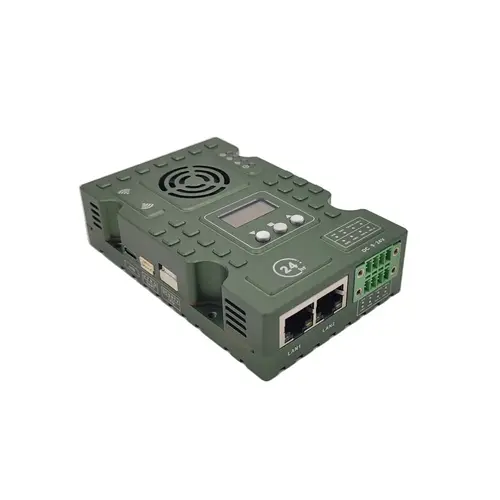
Fengjin FHSS Broadband Transmission System
Industrial FHSS frequency-hopping broadband data link with 130MHz hopping bandwidth, AES256, MIMO, and mesh networking for interference-resistant NLOS/LOS operation.
- 1.400–1.530 GHz · 130 MHz hopping BW
- 300 mW · BPSK/QPSK/16QAM/64QAM
- 30 Mbps · 50 ms latency · AES256
- Mesh, relay, PtP, PtMP (16 nodes)
- RJ45, CAN, RS-485, TTL interfaces
- 110.5 × 70 × 28.5 mm · 236 g
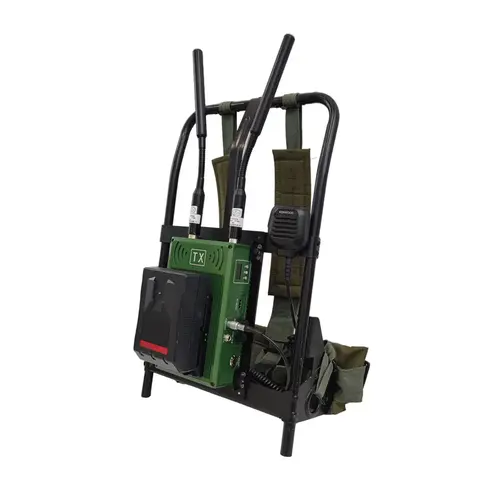
SDX-1080DTA Backpack Duplex Voice HD Video System
Military backpack COFDM HD video system with duplex voice intercom, 60ms low latency, AES256 encryption, and SDI/HDMI inputs for tactical field video relay.
- 300–4400 MHz · COFDM · 2W output
- H.264 · 1080P · 60 ms · AES256
- Duplex digital voice intercom
- SDI + HDMI dual input
- Military backpack design · TF card slot
- TX 204 × 125 × 55 mm · RX 1U 480 × 280 × 45 mm
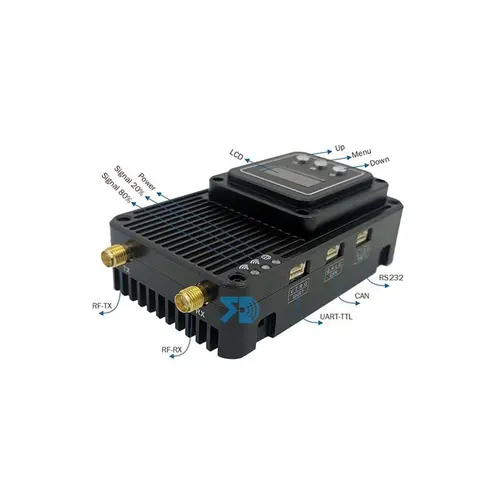
SDXTDD Ad-Hoc Wireless Transmission Module
Compact NLOS TDD-COFDM ad-hoc network module with ≤30ms latency, 300mW output, and CAN/RS-232 control for drones, robotics, and industrial automation.
- 800 MHz / 1.4 GHz / 2.4 GHz selectable
- TDD-COFDM MIMO · 300 mW · 30 Mbps
- ≤30 ms end-to-end · AES256
- NLOS 300–900 m · LOS 2–18 km
- CAN, RS-232, TTL · DC 9–28V
- 95 × 58 × 34 mm
Interested in This Product?
Contact us for pricing, custom configurations, and technical support for the HBCOFDM Micro Broadband Transceiver.
Get a Quote