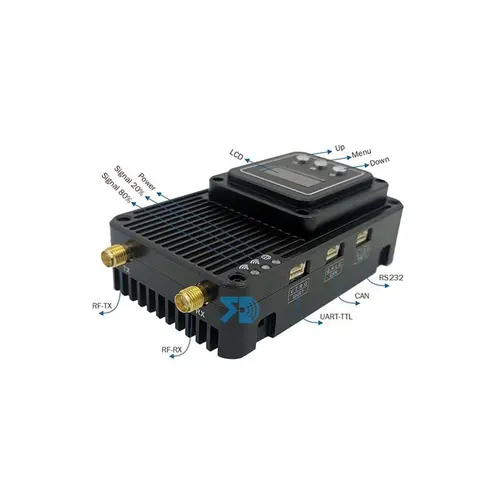
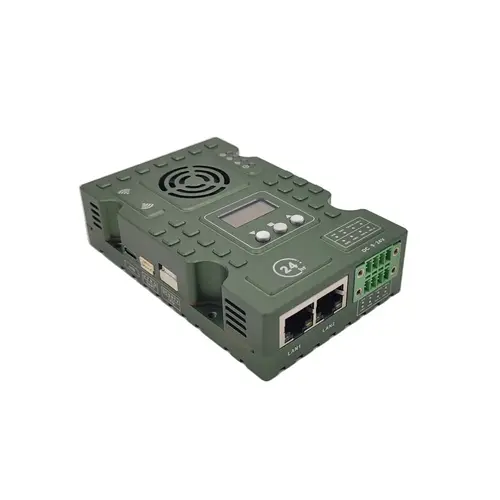
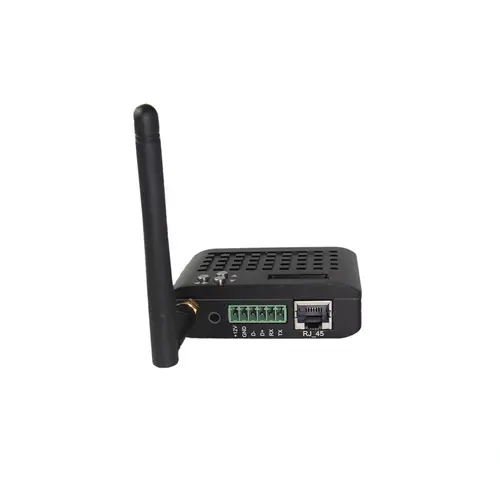
The Fundamental Hurdles of Wireless Image Transmission
Wireless image transmission faces a complex set of technical challenges centered on bandwidth, latency, stability, power efficiency, security, and environmental adaptability. These factors directly impact video quality, real-time responsiveness, and link reliability — especially in mission-critical applications such as drone operations, medical imaging, public safety surveillance, and broadcast production. This article breaks down the core challenges and the technologies designed to overcome them.
Bandwidth Limitations vs. Data Volume
High-definition and ultra-high-definition images (4K, 8K, RAW formats) generate enormous amounts of data, while wireless channel bandwidth remains finite. Even Wi-Fi 6’s theoretical peak of 9.6 Gbps is rarely realized in practice due to overhead, interference, and shared access. Insufficient bandwidth forces higher compression ratios, degrading image quality or reducing frame rate.
Solutions: Advanced codecs such as H.265/HEVC and AV1 significantly reduce bitrate requirements at equivalent quality. AI-driven dynamic bitrate adaptation can automatically lower resolution when channel conditions degrade, maintaining a usable link rather than dropping frames entirely. COFDM-based systems further optimize spectrum utilization through adaptive modulation and narrowband carrier allocation.
Real-Time Latency Constraints
Applications such as drone piloting, augmented/virtual reality, and remote surgical robotics demand end-to-end latency measured in milliseconds. Every stage of the chain — encoding, transmission, decoding — adds delay. Excessive latency causes operator desynchronization and, in safety-critical scenarios, can lead to accidents.
Solutions: Low-latency transmission protocols combined with hardware-accelerated encoding (FPGA/ASIC-based H.264/H.265 encoders) can bring total system latency below 100 ms. COFDM technology inherently supports low-latency transmission by eliminating the retransmission overhead of packet-based protocols, making it the preferred choice for real-time wireless image transmission in UAV and security applications.
Signal Stability and Anti-Interference
Wireless channels are inherently vulnerable to multipath fading, co-channel interference, and physical obstructions such as buildings and foliage. These effects cause packet loss, video stuttering, macroblocking artifacts, and complete link dropouts.
Solutions: Multiple-input multiple-output (MIMO) antenna systems improve link robustness through spatial diversity. Adaptive frequency hopping avoids congested spectrum segments. Redundant transmission schemes forward error correction (FEC) data alongside video to recover from packet loss without retransmission. COFDM’s multicarrier modulation excels here — by spreading data across hundreds of orthogonal subcarriers, it inherently resists multipath interference and maintains usable links in NLOS conditions where single-carrier systems fail.
Power Efficiency vs. Performance Balance
Mobile platforms — drones, body-worn cameras, portable transmitters — operate on limited battery capacity, yet high-definition wireless image transmission draws significant power from both RF amplification and video encoding.
Solutions: Low-power system-on-chip designs and target wake time (TWT) mechanisms (as in Wi-Fi 6) help manage energy consumption. For professional systems, intelligent power management that adjusts transmit power based on link quality can extend operational runtime without sacrificing image quality when conditions are favorable.
Security and Privacy Risks
Wireless signals are inherently susceptible to interception, jamming, and man-in-the-middle attacks. Unauthorized access to video feeds can leak sensitive operational or personal data, while malicious injection can disrupt or hijack camera systems.
Solutions: End-to-end AES 128/256 encryption ensures that even if the RF signal is captured, the video content remains indecipherable. Device authentication protocols prevent unauthorized transmitters from joining the network. COFDM systems used in defense and public safety applications typically mandate hardware-level encryption and frequency-hopping spread spectrum for additional transmission security.
Environmental Adaptability
Different operational environments impose vastly different demands: long-range UAV beyond visual line of sight, high-speed vehicular tracking, industrial EMI-heavy factories, or adverse weather conditions. A single wireless image transmission solution must adapt across these extremes.
Solutions: Multi-link aggregation combining 4G/5G with dedicated microwave or satellite backup provides failover resilience. Adaptive modulation dynamically adjusts QAM constellation density based on real-time signal-to-noise ratio, maximizing throughput in good conditions while maintaining link integrity as conditions degrade.
Conclusion
Wireless image transmission remains one of the most demanding engineering challenges in modern communication systems. Technologies like COFDM, MIMO, adaptive modulation, and AES encryption have converged to address bandwidth limits, NLOS interference, latency, and security — enabling reliable high-definition video links in the most difficult operational environments.