Transforming Industries with Bidirectional Broadband
High-power wireless bidirectional broadband transmission systems are redefining how data moves across mission-critical environments. Unlike conventional unidirectional links, bidirectional broadband enables simultaneous uplink and downlink communication at high data rates, supporting real-time video, telemetry, and command traffic. Built on COFDM modulation and MANET mesh networking, these systems thrive in non-line-of-sight (NLOS) conditions where traditional infrastructure fails.
Key Application Sectors
Industrial Automation and Smart Manufacturing
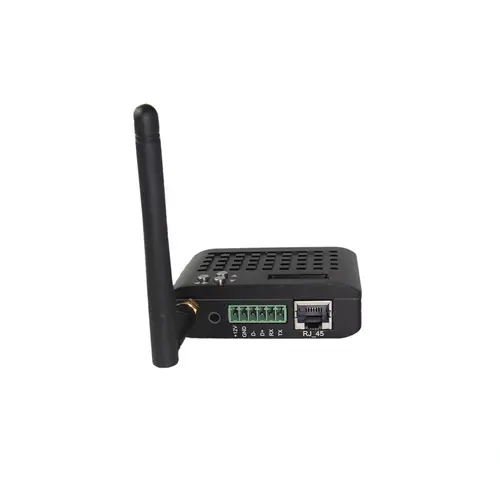
In modern factories, high-power wireless bidirectional broadband transmission provides the backbone for collaborative robotics and real-time process monitoring. Automated guided vehicles (AGVs), assembly robots, and quality inspection stations exchange telemetry and video without the constraints of cabling. This reduces deployment costs and allows factory floor reconfiguration on demand. Sdison’s TDD-COFDM OEM board, for instance, integrates directly into industrial equipment for low-latency bidirectional data links.
Transportation and Intelligent Traffic Systems
Vehicle-to-infrastructure (V2I) and vehicle-to-vehicle (V2V) communication demand reliable bidirectional throughput. High-power bidirectional broadband enables traffic management centers to receive real-time camera feeds while broadcasting navigation updates and hazard alerts back to vehicles. This two-way capability is essential for autonomous fleet coordination and emergency vehicle prioritization.
Telemedicine and Remote Healthcare
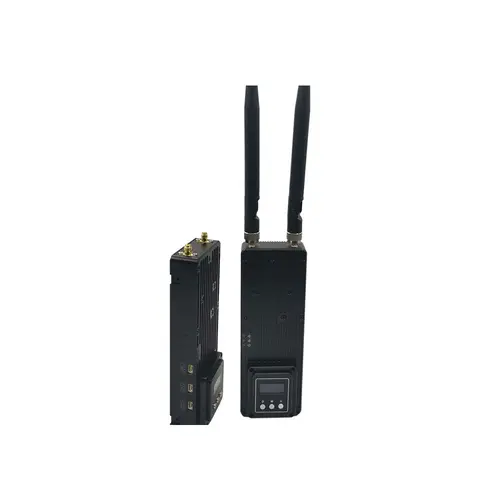
Bidirectional broadband transmission supports high-definition video conferencing between remote clinics and urban hospitals, alongside simultaneous transfer of diagnostic imaging data. In rural or disaster-affected areas where wired infrastructure is unavailable, a deployable manpack system like the HBFDD-A can establish a bidirectional link within minutes, enabling remote specialists to guide on-site personnel through procedures.
Public Safety and Emergency Response
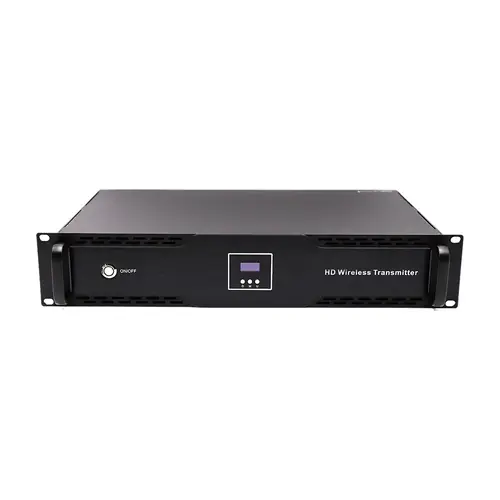
First responders operating in collapsed structures, tunnels, or dense urban environments rely on bidirectional broadband to maintain situational awareness. A high-power system mounted on a vehicle (such as the HD1080PTB vehicle-based unit) or carried as a manpack relays wideband video from the incident scene back to command while receiving tactical instructions. The mesh networking capability ensures that if one node goes down, traffic re-routes automatically through surviving nodes.
Technical Advantages of High-Power Bidirectional Systems
The defining feature of these systems is their combination of high transmit power (typically 1W to 20W) with COFDM modulation, which resists multipath interference in built-up or indoor environments. MIMO antenna configurations further improve spectral efficiency. By operating in the UHF or L-band spectrum, high-power bidirectional broadband transmission systems achieve penetration through concrete, foliage, and terrain that lower-power Wi-Fi or cellular links cannot match.
Conclusion
High-power wireless bidirectional broadband transmission systems are a cornerstone technology for applications that demand simultaneous, real-time data exchange in challenging environments. From factory floors to disaster zones, the ability to send and receive high-bandwidth signals in NLOS conditions makes these systems indispensable. Sdison Technology continues to advance this field with products purpose-built for defense, public safety, and industrial use.