Transforming Fireground Communications
In firefighting operations, reliable communication can mean the difference between mission success and catastrophic failure. Handheld ad-hoc mesh radios are emerging as a transformative tool for fireground communications, offering capabilities that traditional infrastructure-based radio systems cannot match.
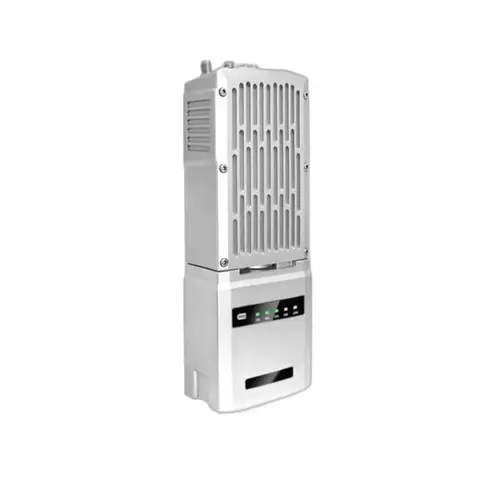
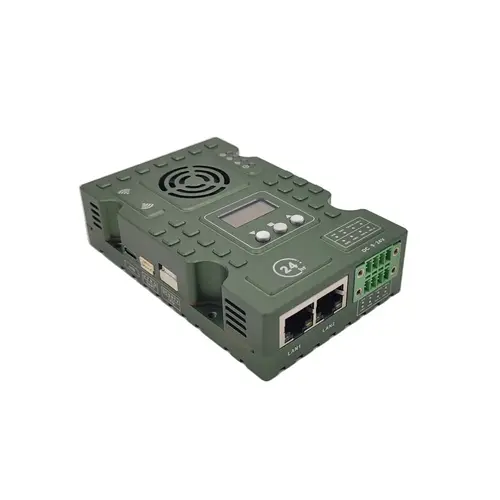
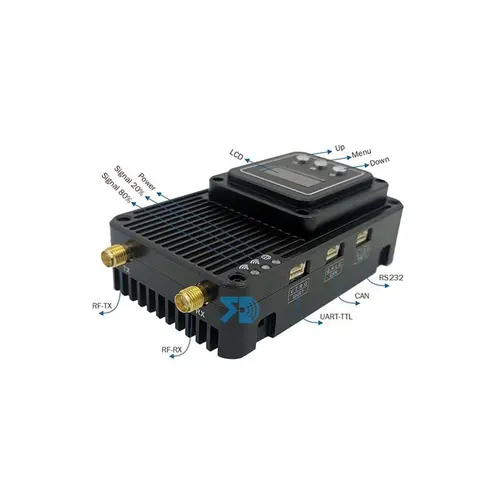
These handheld MANET (Mobile Ad-Hoc Network) radios operate on a decentralized mesh architecture, freeing firefighters from the constraints of a central base station or repeater. Every radio node is peer-equivalent, capable of functioning simultaneously as a terminal node, a relay node, or a network gateway. This flexibility enables rapid deployment of a robust, self-healing communication network at any incident scene.
True Ad-Hoc Networking
The defining advantage of handheld mesh radios is their ability to form any-topology networks automatically. Each node continuously evaluates link quality, bandwidth availability, and error rates to calculate optimal routing paths through the network. In a dynamic fire scene where conditions change by the second — walls collapse, crews move between floors, apparatus reposition — this self-organizing capability ensures communications remain continuous and stable.
Unlike conventional single-hop radio systems that fail when the direct link to the command post is obstructed, a mesh network automatically routes traffic through intermediate nodes. A firefighter on the fourth floor can communicate with the incident commander via a relay through a crew on the second floor, even when both are out of direct line-of-sight.
Security and Encryption
Handheld mesh radios implement multiple layers of security protection. Beyond basic frequency and bandwidth configuration, they support multiple encryption layers including AES 128/256-bit encryption. This ensures that tactical communications, sensitive operational plans, and incident data remain protected from interception or eavesdropping.
Resilience Through Technology
These radios leverage advanced waveform technologies to survive the harsh RF environment of an active fire scene. COFDM modulation provides resistance to multipath interference from surrounding structures. MIMO antenna technology improves data throughput and link reliability. ARQ (Automatic Repeat reQuest) error control ensures data integrity without operator intervention.
The combination of these technologies yields exceptional anti-jamming and anti-destruction capability. Even when individual nodes are lost to structural collapse or equipment damage, the mesh self-heals by routing around the failure, maintaining connectivity for the remaining operational units.
Flexible Deployment
The multi-node, self-configuring nature of handheld mesh radios means firefighters can deploy them without specialized training. Nodes join the network automatically on power-up, negotiate channel parameters, and begin relaying traffic. As the incident expands, additional radios join seamlessly, extending the network footprint without manual configuration.
Conclusion
Handheld mesh radios represent a paradigm shift in fireground communications. Their decentralized architecture, automatic routing, robust encryption, and battlefield-proven resilience give firefighting crews the reliable, survivable communication network that modern emergency response demands. As mesh technology continues to mature, these handheld MANET radios will become the new standard for fire service communications worldwide.