Why Security Matters in Robot Mesh Networks
Robot mesh wireless video transmission systems carry sensitive data — surveillance footage, telemetry, control commands — across open airwaves. Without robust security, these links are vulnerable to interception, tampering, and unauthorized access. For defense, public safety, and industrial applications, a breach is not just a data leak; it can compromise mission integrity or endanger lives. Below are the essential measures used to protect wireless video transmission in robot mesh networks.
Encryption: The First Line of Defense
Strong Encryption Protocols
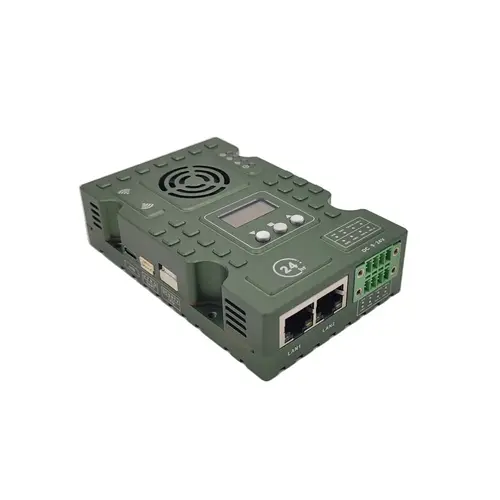
All wireless video data should be encrypted using industry-standard algorithms. AES-256, supported by Sdison’s MANET mesh radios, provides military-grade protection against eavesdropping. The SDX1400 handheld mesh radio and SDX-1400-1 command platform implement AES encryption at the link layer, ensuring that even if a transmission is intercepted, the content remains indecipherable.
End-to-End Encryption
Beyond link-layer encryption, end-to-end encryption guarantees that data stays encrypted from the source robot through intermediate mesh hops to the destination. This prevents any single compromised node from exposing the raw video stream.
Authentication and Access Control
Mutual Authentication
Every node in the mesh must prove its identity before being admitted to the network. Mutual authentication — where both sender and receiver verify each other’s credentials — prevents rogue devices from joining the mesh. Sdison’s mesh radios use digital certificate-based authentication compatible with PKI infrastructure.
Role-Based Access Control
Not every operator needs full access to every video stream. Implementing role-based permissions ensures that only authorized personnel can view, record, or retransmit specific feeds. This is especially important when multiple agencies share a common mesh network during joint operations.
Network Segmentation and Isolation
Segregating data traffic within the mesh reduces the attack surface. Using virtual LAN (VLAN) partitioning or dedicated frequency sub-bands, critical control commands can be isolated from bulk video traffic. This prevents an adversary who gains access through a compromised camera node from injecting control packets into the command channel.
Real-Time Monitoring and Incident Response
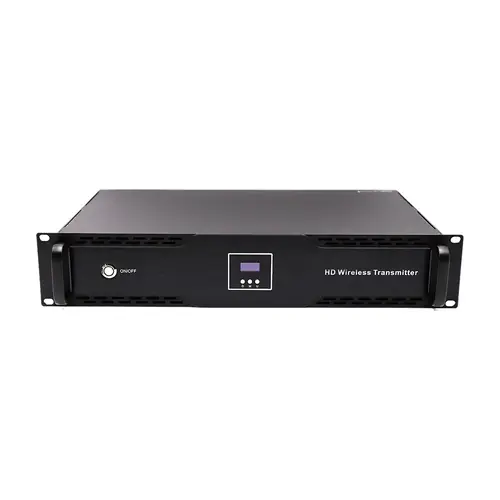
Deploying intrusion detection systems (IDS) tuned to mesh network traffic patterns allows operators to spot anomalous behavior — unexpected node joins, unusual data rates, or repeated authentication failures. Coupled with comprehensive logging, these tools enable rapid forensic analysis after any security event. Sdison’s command platform integrates live network topology views with per-node status indicators to flag suspicious activity as it happens.
Physical Security and Firmware Hygiene
Encryption is useless if an adversary gains physical access to a radio. Mesh nodes should have tamper-evident casings and secure erase mechanisms. Regular firmware updates patch discovered vulnerabilities, and signed firmware images prevent malicious code from being flashed onto field devices.
Conclusion
Securing robot mesh wireless video transmission requires a layered approach: encryption, authentication, network segmentation, monitoring, and physical protection. Sdison Technology designs its MANET mesh products with these principles built in, from the compact SDX1400 handheld to the rack-mount SDX-1400-1 command station, ensuring that every video frame is both reliable and confidential.