Large-Scale Fire Rescue Communication Drill in Nanning
On June 7, the Nanning Fire Rescue Detachment conducted a large-scale field communication support drill at the Liujing Industrial Park in Hengxian, Guangxi. The exercise re-enacted the “5.21” open-air storage yard fire — a massive blaze that destroyed nearly 100,000 tons of bagasse across 80,000 square meters of a paper mill under construction. That original incident required 37 fire trucks and 218 personnel from 13 squadrons, with firefighters battling the flames for 36 hours to contain the fire and protect adjacent facilities and materials valued at approximately 60 million yuan.
Communication Challenges in Long-Range Fireground Operations
The “5.21” fire exposed a critical vulnerability: the incident site was located over 60 kilometers from the city center, well beyond the coverage of the municipal communication network. Commanders on-site established a dedicated fireground communication dispatch group tasked with rapidly deploying a field communication network to ensure uninterrupted command coordination.
During the June 7 drill, the detachment simulated identical conditions. At 15:30, the on-scene commander activated the Nanning Fire Rescue Emergency Communication Plan, mobilizing squadrons from across the city. Since the fireground lay outside the metropolitan signal coverage area, each unit configured their 800 MHz radios to channel 16 (single-frequency point) as the command network, while 350 MHz radios were set to channel 20 as the tactical fireground network.
COFDM Wireless Image Transmission in Action
Each of the 13 participating squadrons brought vehicle-mounted radio stations, handheld transceivers, and emergency communication systems to their assigned positions. Communication teams rapidly erected antennas and radio stations, establishing a fully functional field emergency communication command system linking commanders directly with frontline firefighters.
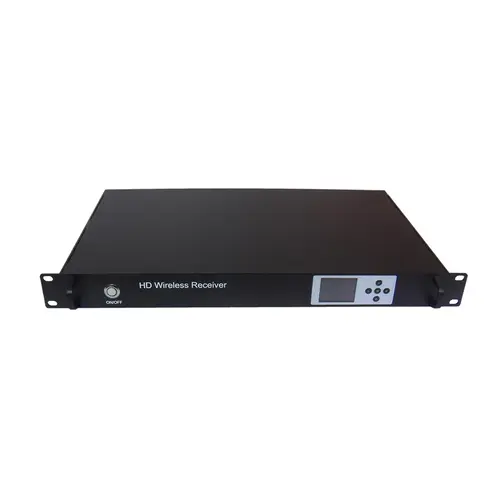
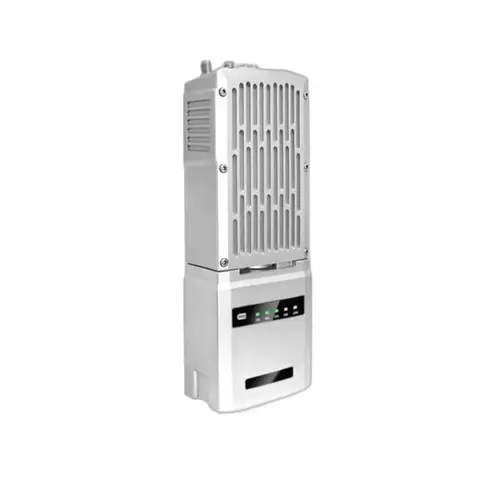
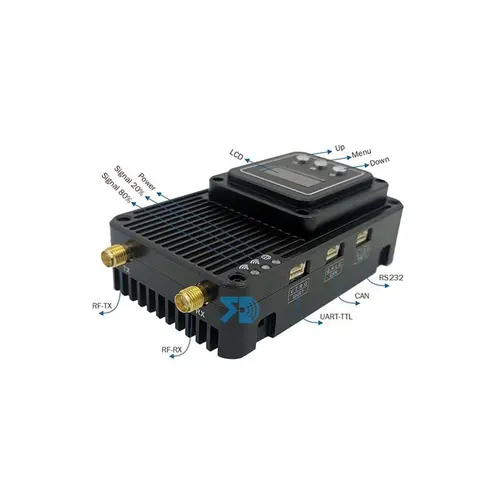
A communications operator equipped with a handheld video camera and a COFDM wireless image transmission system captured real-time footage from the “fire scene” and transmitted it back to the command post. On the communications command vehicle, high-definition video appeared on screens, enabling the incident commander and deputies to assess the situation, develop suppression strategies, and adjust tactical deployments — all while issuing clear commands to every firefighter on the ground.
Key Takeaways for Emergency Communication Readiness
The drill demonstrated that COFDM wireless transmission equipment provides robust non-line-of-sight (NLOS) video relay capability essential for large-scale fireground operations. The rapid deployment of MANET-style mesh communication networks ensured seamless command-and-control across a dispersed incident scene. For fire rescue organizations operating beyond urban communication infrastructure, COFDM wireless video transmission systems have become indispensable for maintaining situational awareness and command effectiveness in complex, long-range emergency scenarios.
The successful exercise validated that redundant communication channels — combining VHF/UHF voice radio with wireless image transmission — create a comprehensive mobile command center capable of supporting sustained multi-unit firefighting operations.
Conclusion
As fire rescue operations grow in scale and complexity, the demand for reliable COFDM wireless transmission in emergency communication grows with it. Nanning’s drill confirms that field-deployable wireless image transmission systems are no longer optional equipment — they are essential infrastructure for modern fireground command and control.