Defining the Soldier Wireless Video Transmission System
A soldier wireless video transmission system (Individual Soldier Wireless Video Transmission System) is a portable real-time video and data transmission device designed for individual soldiers or small tactical units. Its purpose is to send frontline battlefield footage, environmental data, and sensor information back to command centers or cooperating units over wireless links. This real-time situational awareness enhances decision-making, mission coordination, and overall team effectiveness in military, law enforcement, and emergency rescue scenarios.
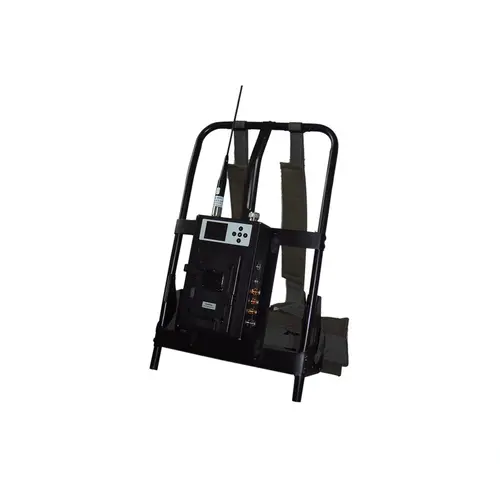
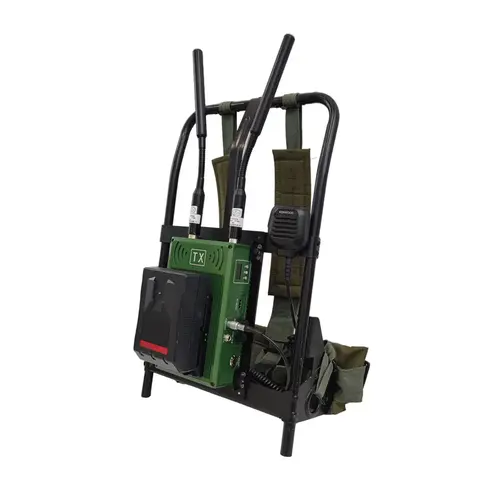
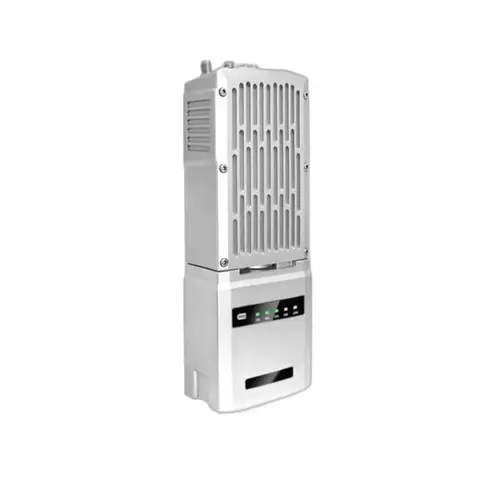
Sdison Technology (Shenzhen) manufactures COFDM-based soldier wireless transmission systems including the HBFDD-A manpack and SDX1400 handheld mesh radio, purpose-built for these demanding operational environments.
Core Features
Portability
These systems are engineered for mobility. The lightweight design — typically under 2 kilograms — allows integration into helmet mounts, tactical vests, or handheld configurations suitable for field operations. Modular construction supports rapid assembly, disassembly, and expansion, such as adding thermal imaging modules.
Real-Time Transmission
Low latency — typically under 500 milliseconds — enables live high-definition video streaming at 720p to 4K resolution, including infrared and thermal imaging feeds. Many systems also support bidirectional communication, allowing the command center to send instructions directly to the operator in the field.
Anti-Interference and Security
COFDM (Coded Orthogonal Frequency Division Multiplexing) modulation provides excellent resilience against multipath fading and co-channel interference in complex electromagnetic environments. Combined with frequency-hopping spread spectrum (FHSS) techniques, the link remains robust even under deliberate jamming attempts. Military-grade encryption — AES-128 or AES-256 — protects against data interception and tampering.
Flexible Networking
Soldier wireless systems support point-to-point links and mesh self-organizing networks (MANET). When terrain or distance blocks the direct signal, the network can relay through intermediate nodes such as UAV-mounted repeaters or vehicle-based relay stations, extending coverage across wide or obstructed areas.
Typical Applications
- Military Reconnaissance: Special forces transmit enemy activity footage in real time during infiltration missions
- Counterterrorism Operations: Room-clearing teams share threat location information during indoor engagements
- Fire Rescue: Firefighters operating in smoke-filled buildings relay interior structural video to the incident commander
- Border Patrol: Remote patrol teams maintain visual contact with command centers across expansive terrain
System Components
| Module | Function |
|---|---|
| Front-End Capture | Helmet camera, handheld camera, thermal imager |
| Wireless Transmission Module | COFDM / 4G / Mesh radio; selectable UHF or L-band frequencies |
| Back-End Receiver | Tactical tablet, command center display, cloud storage platform |
| Power and Accessories | High-capacity battery, tactical antenna, portable backpack |
Technical Challenges
- Environmental Adaptability: Systems must function reliably in complex terrain (urban canyons, dense forest) and extreme weather (rain, snow, high heat)
- Battery vs. Weight Trade-Off: High-power transmission for extended range competes with the soldier’s limited carrying capacity
- Spectrum Coordination: Operating across civilian bands (4G/5G) and dedicated military frequencies requires careful spectrum planning
Conclusion
A soldier wireless video transmission system functions as the “visual nerve” of modern dismounted operations. By breaking down information silos through real-time video sharing, these systems dramatically improve small-unit coordination, survivability, and mission effectiveness. Sdison Technology offers a range of COFDM-based soldier transmission solutions built for the harshest operational conditions.